January 5, 2026
Automation Tools That Work Across Every Home Service Industry
Automation tools are not industry-specific. This guide explains the core tools home service businesses use and how those tools adapt across HVAC, plumbing, cleaning, roofing, and more.
Written by Frankwin Hooglander
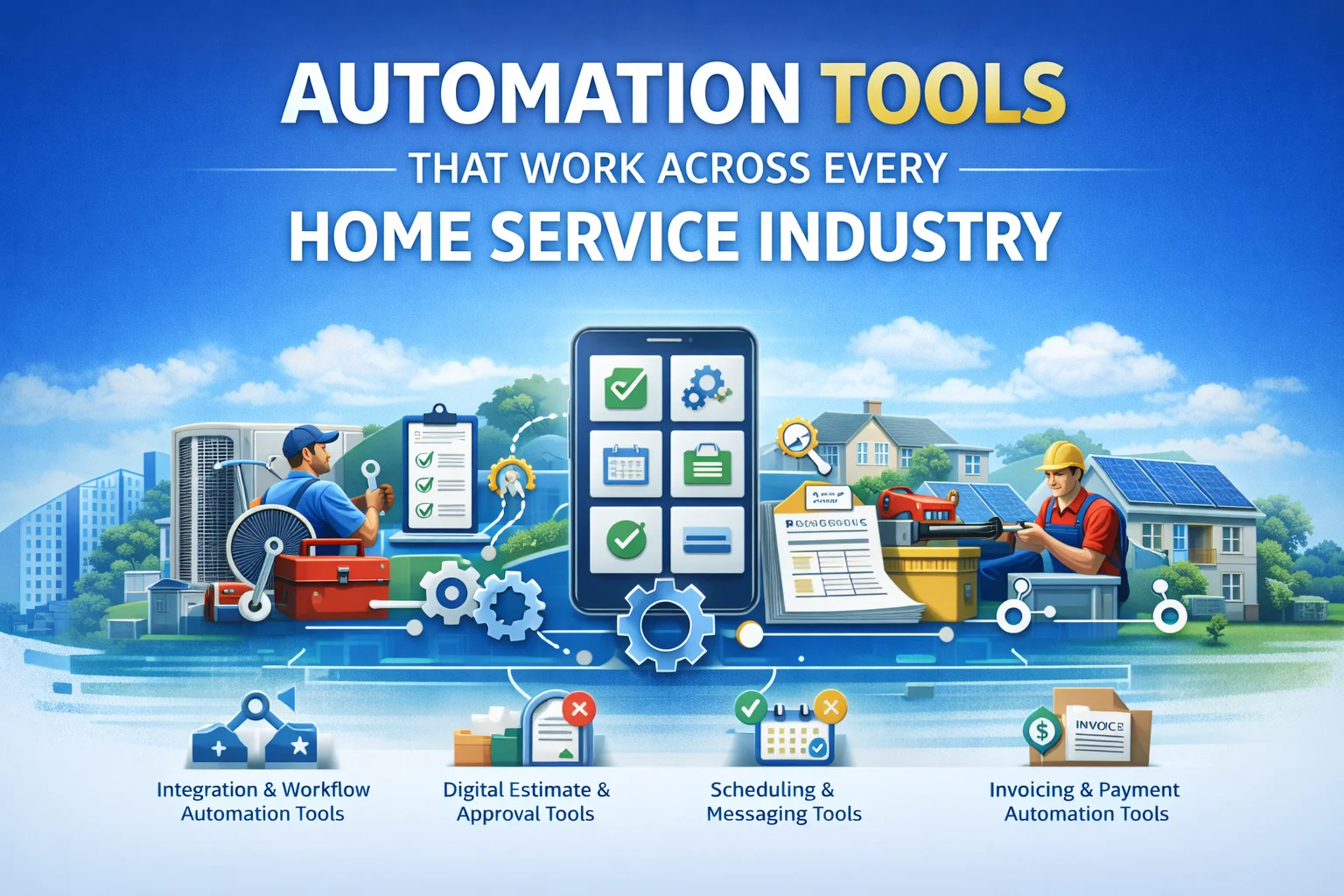
Most home service businesses assume automation requires industry-specific software. In reality, many of the most effective automation tools work across nearly every trade. What changes is not the tool itself, but how it is used.
Whether you run an HVAC company, a plumbing business, a cleaning service, or a roofing operation, the same core systems often power daily operations. Automation connects those systems so work flows smoothly without constant manual effort.
This article explains the automation tools home service businesses use most often and how those tools adapt across different industries.
Why Automation Tools Are Industry-Flexible
Home service businesses share common workflows. Leads come in. Jobs are scheduled. Work is completed. Customers expect follow-ups and invoices.
Because these steps repeat across trades, automation tools are designed to be flexible. A cleaning company and an electrical contractor may use the same platform, but the workflows inside that platform will look different.
Automation tools act as the framework. Your processes shape how that framework is used.
Job Management and CRM Platforms
At the center of most automation systems is a job management or CRM platform. This is where customer information, schedules, and job details live.
For HVAC, plumbing, and appliance repair businesses, the CRM manages high call volume and fast scheduling. For cleaning, pool service, and landscaping businesses, it handles recurring appointments and long-term customers. For roofing, solar installation, and painting companies, it supports longer sales cycles and detailed job tracking.
Automation builds on the CRM by triggering messages, reminders, and updates without manual input. When the CRM is organized, automation becomes reliable.
Integration and Workflow Automation Tools
Most businesses use more than one piece of software. Integration tools connect those systems so information flows automatically.
For example, when a new lead enters a CRM, automation can send a confirmation message, create a task, or trigger a follow-up sequence. When a job is completed, the system can generate an invoice and notify the customer.
This type of automation works across every industry. A locksmith benefits from instant lead capture just as much as a roofing contractor benefits from automated proposal follow-ups.
Integration tools reduce duplicate data entry and prevent information from getting lost between systems.
Scheduling and Calendar Automation
Scheduling is one of the most universal challenges in home services. Automation tools support scheduling by confirming appointments, sending reminders, and updating calendars automatically.
For window cleaning and pool service businesses, scheduling automation supports recurring routes. For HVAC and electrical companies, it manages high job volume with minimal friction. For tree service and landscaping companies, it helps coordinate crews and seasonal workloads.
Automated scheduling improves reliability without changing how technicians perform their work.
Communication and Messaging Tools
Customers expect fast and clear communication. Automation tools handle much of this communication without feeling impersonal.
Automated messages confirm bookings, provide arrival updates, and follow up after jobs. When designed correctly, these messages feel helpful rather than robotic.
This is especially valuable for emergency services like plumbing and locksmith work, where reassurance matters. It is equally important for cleaning and pest control businesses, where consistency builds trust over time.
Automation ensures communication happens even when staff are busy.
Digital Estimates and Approval Tools
Sending estimates manually slows down sales cycles. Digital estimate and approval tools speed things up by allowing customers to review and approve work electronically.
Roofing, solar installation, painting, and power washing businesses benefit heavily from automated approvals because decisions often take time. Automation sends reminders without pressure and keeps projects moving forward.
Once approved, automation can trigger scheduling, material ordering, or invoicing workflows automatically.
Invoicing and Payment Automation
Getting paid on time is critical for every service business. Automation tools support invoicing by sending invoices immediately after work is completed and following up when payments are overdue.
For high-volume businesses like HVAC, plumbing, appliance repair, and handyman services, automated invoicing prevents backlogs. For project-based businesses like roofing and solar installation, it keeps billing aligned with job progress.
Payment automation improves cash flow and reduces administrative stress.
Review and Reputation Management Tools
Reviews play a major role in customer decisions. Automation tools support reputation management by sending review requests automatically after jobs are completed.
Cleaning, pest control, landscaping, window cleaning, and pool service businesses benefit especially from this because they rely on repeat customers and local trust.
Automation ensures review requests are consistent, timely, and easy for customers to complete.
How These Tools Work Together as a System
Each automation tool plays a role, but the real power comes from how they connect. When systems are linked, actions in one tool trigger responses in another.
A lead becomes an appointment. An appointment becomes a job. A job becomes an invoice. An invoice becomes a review request.
This system works across every home service industry because it mirrors how businesses already operate. Automation simply removes the manual steps in between.
Choosing Tools Without Overcomplicating Your Setup
The biggest mistake businesses make is adopting too many tools too quickly. Automation works best when it is simple and intentional.
Start with the system that runs your business. Build automation around it. Add tools only when they solve a clear problem.
Automation should reduce complexity, not add to it.
Final Thoughts
Automation tools are not limited to one industry. They are designed to support the shared workflows that exist across all home service businesses.
When used correctly, these tools save time, reduce stress, and create a better experience for both customers and staff. The technology stays the same. The workflows adapt to the trade.
That flexibility is what makes automation such a powerful foundation for modern service businesses.