January 6, 2026
Automation vs Hiring: What Actually Saves Home Service Businesses More Money?
Many service businesses hire to fix chaos. This guide explains when automation saves more money than hiring and how smart systems support long-term growth.
Written by Frankwin Hooglander
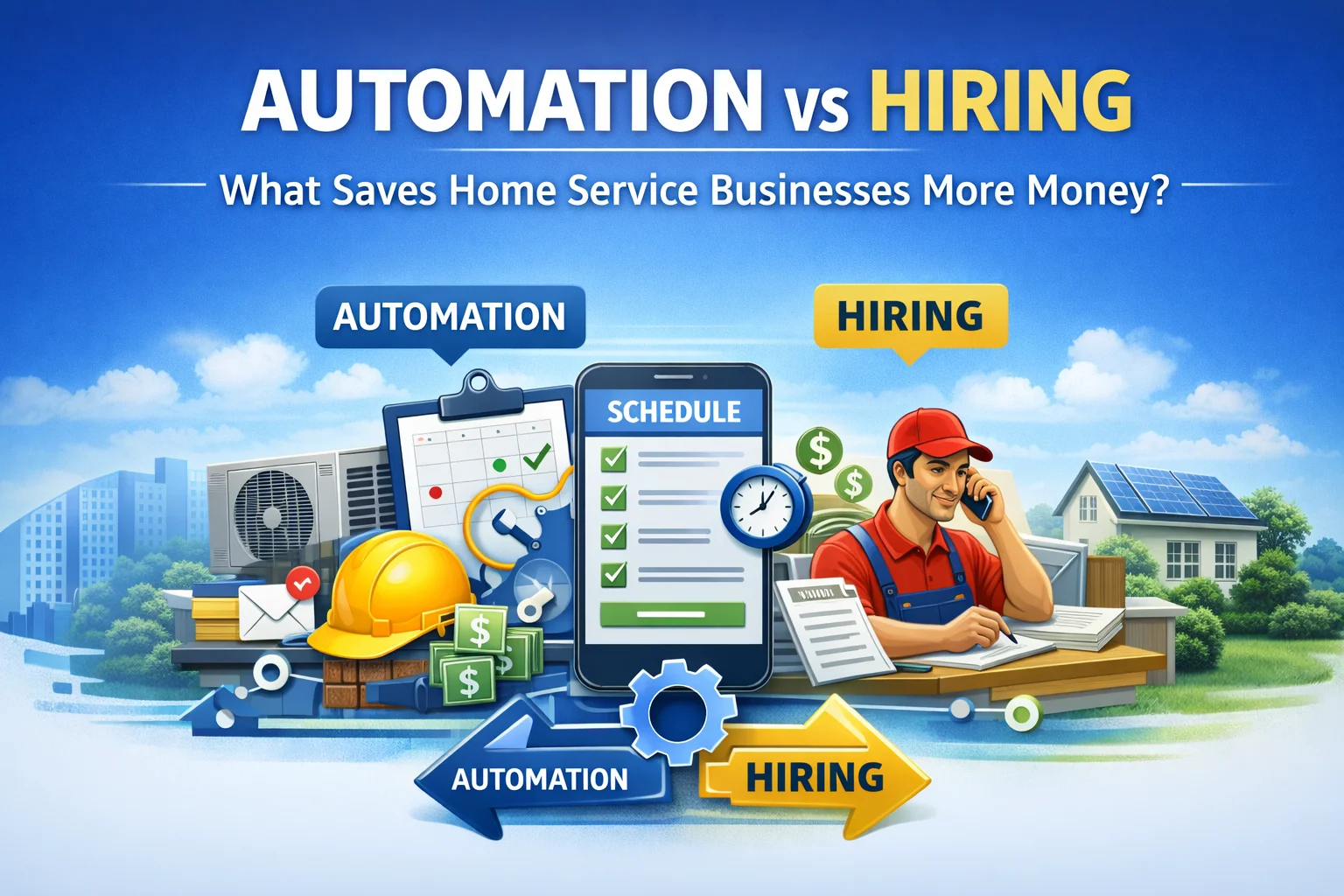
Every growing home service business reaches the same crossroads. Calls increase. Scheduling gets messy. Follow-ups fall behind. At that point, owners usually ask one question.
“Do I need to hire someone, or do I need better systems?”
Both hiring and automation solve problems. However, they solve very different problems in very different ways. Understanding that difference is critical for long-term growth.
This article breaks down automation vs hiring for home service businesses and explains which option truly saves more money over time across HVAC, plumbing, cleaning, electrical, roofing, landscaping, and other trades.
Why This Question Comes Up So Often
Growth creates pressure. More leads mean more calls. More jobs mean more paperwork. More customers mean more communication.
At first, business owners handle everything themselves. Eventually, that stops working. Tasks pile up, mistakes happen, and stress increases.
Hiring feels like the natural next step. After all, more work should mean more people. However, many businesses discover that hiring alone does not fix broken workflows.
This is where automation enters the conversation.
What Hiring Solves and What It Does Not
Hiring adds human capacity. An office assistant can answer phones, schedule jobs, and send invoices. A dispatcher can manage technicians. An admin can handle follow-ups.
These roles are valuable. However, they are also expensive and limited by time.
An employee works set hours. They can forget tasks. They need training, oversight, and consistency. When systems are unclear, even great employees struggle.
In many cases, businesses hire to fix inefficiency instead of fixing the system itself.
What Automation Solves Differently
Automation removes repeat work. It handles tasks that happen the same way every time.
When a lead comes in, automation responds instantly. When an appointment is booked, automation confirms it. When a job is completed, automation sends the invoice and follow-up messages.
Automation does not get tired. It does not forget. It works nights, weekends, and during peak seasons without added cost.
For many home service businesses, automation replaces dozens of small tasks that would otherwise require additional staff.
Cost Differences Over Time
Hiring creates ongoing costs. Wages, payroll taxes, benefits, and training expenses add up quickly. If workload drops, those costs remain.
Automation usually has a fixed monthly cost. Once systems are set up, they scale with the business. Whether you handle ten jobs a week or a hundred, the automation still works.
Over time, automation often costs less than a single part-time hire while supporting the work of multiple people.
This is why many service businesses automate first and hire later.
How This Plays Out Across Home Service Industries
In HVAC and plumbing businesses, call volume spikes during peak seasons. Hiring for those spikes often leads to overstaffing during slower months. Automation absorbs much of that demand by responding instantly and keeping schedules organized.
In cleaning and pool service businesses, recurring work creates heavy scheduling demands. Automation manages those schedules without requiring additional office staff.
In roofing, solar installation, and painting businesses, long sales cycles create constant follow-up work. Automation keeps proposals moving without hiring dedicated sales support.
In landscaping, pest control, and tree service businesses, seasonality creates unpredictable workloads. Automation provides stability without long-term staffing commitments.
Across industries, the pattern is the same. Automation handles consistency. People handle exceptions.
When Hiring Makes Sense After Automation
Automation does not eliminate the need for people. Instead, it changes when and how hiring makes sense.
Once systems are automated, employees become more effective. Office staff spend less time on repetitive tasks and more time supporting customers. Managers focus on growth instead of cleanup.
Hiring works best when automation is already in place. Without systems, new hires inherit chaos. With systems, they amplify efficiency.
Automation prepares a business for smart hiring instead of reactive hiring.
The Risk of Hiring Too Early
Hiring before automating often leads to frustration. New employees spend their time chasing information, fixing mistakes, and manually doing tasks that could be automated.
This creates burnout and turnover. It also increases costs without improving performance.
Many businesses believe they need more people. In reality, they need better systems.
Automation exposes where hiring is truly needed and where it is not.
A Smarter Growth Path for Service Businesses
The most successful home service businesses follow a similar path. They automate daily tasks first. They stabilize operations. Then they hire strategically.
This approach reduces risk and protects profit. It allows owners to grow without committing to payroll prematurely.
Automation creates leverage. Hiring adds capacity. Together, they create sustainable growth.
Final Thoughts
Automation vs hiring is not an either-or decision. It is a timing decision.
For most home service businesses, automation delivers faster results at a lower cost. It solves daily problems immediately and scales with growth. Hiring works best once systems are already in place.
When automation comes first, every hire becomes more valuable. That is how modern service businesses grow without burning out.