January 6, 2026
Common Website Mistakes Home Service Businesses Make
Many home service websites struggle because of small but costly mistakes. This post explains the most common website issues that reduce trust, hurt conversions, and block growth. Learn what to fix and why it matters.
Written by Frankwin Hooglander
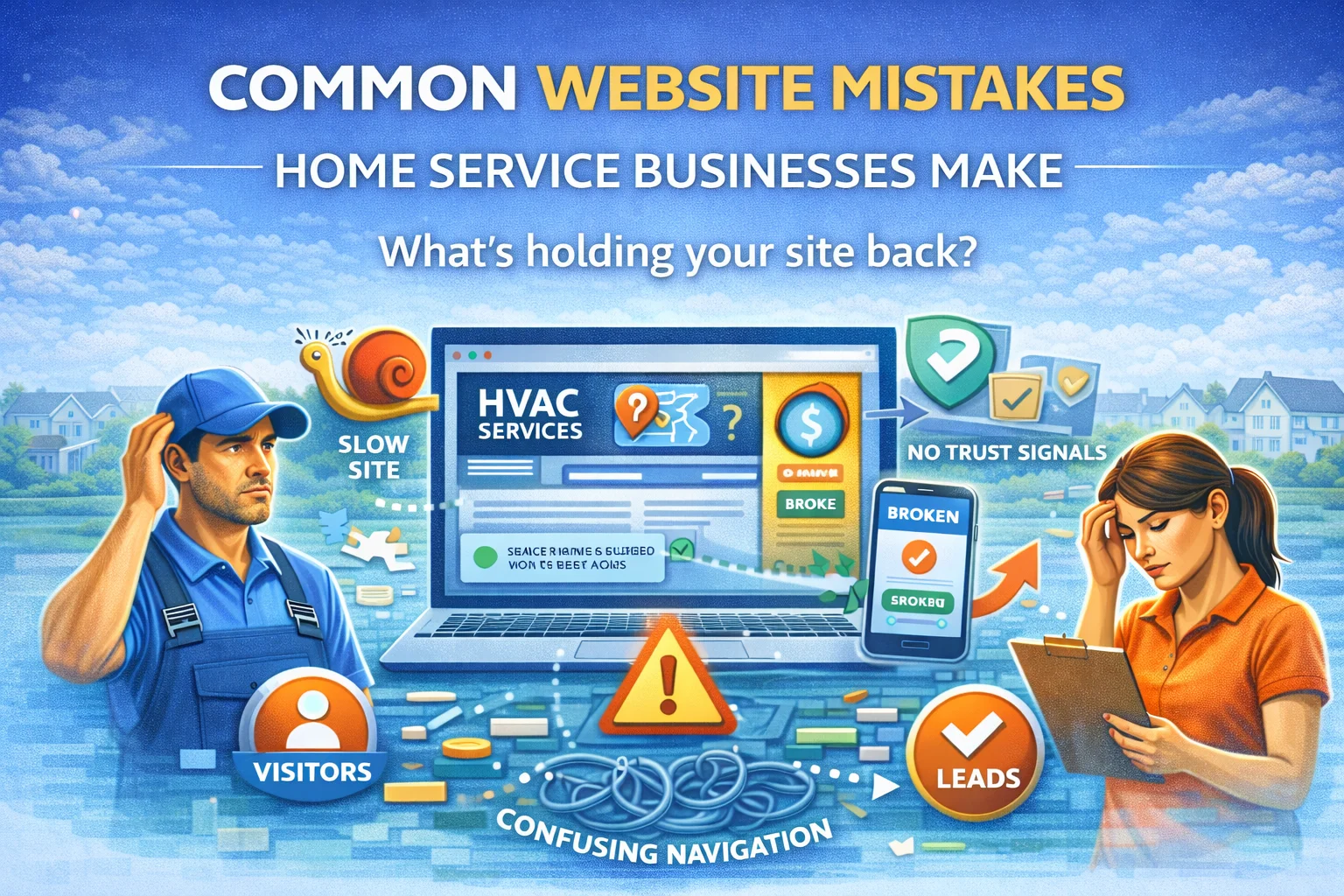
Many home service business owners sense that their website is not pulling its weight. Leads feel inconsistent. Traffic does not convert. Customers still call with basic questions that should already be answered online.
In most cases, the issue is not effort. It is a collection of small website mistakes that quietly block growth.
These mistakes show up across HVAC, plumbing, electrical, cleaning, roofing, landscaping, and nearly every other home service industry. The good news is that once they are understood, they are fixable.
This article breaks down the most common website mistakes home service businesses make and explains why they hurt performance.
Treating the Website Like an Online Flyer
One of the most common mistakes is treating a website as a digital version of a business card or brochure. The site lists services, shows a logo, and includes a phone number, but nothing else guides the visitor.
Customers today expect more. They want reassurance, clarity, and direction. When a website does not guide visitors toward action, they leave without contacting the business.
A website should work like a sales tool, not a static display.
Making It Hard to Take the Next Step
Many service business websites hide contact options or make them difficult to use. Phone numbers are buried. Forms are long or confusing. Calls to action are inconsistent.
When visitors cannot quickly figure out how to request service, hesitation sets in. Even motivated customers may leave and choose another provider.
Clear and visible next steps are essential for conversion.
Ignoring Mobile Experience
Most home service customers visit websites on their phones. However, many sites are still designed primarily for desktop users.
Buttons that are too small, slow load times, and awkward layouts frustrate mobile visitors. This leads to high bounce rates and lost leads.
Mobile usability is not optional. When mobile experience is poor, the website fails at its most important job.
Focusing on Design Instead of Clarity
A visually impressive website can still perform poorly. Overdesigned layouts, excessive animations, and unclear messaging distract visitors instead of helping them.
Customers are not visiting for creativity. They are visiting for solutions.
Clear messaging, readable text, and simple layouts outperform complex designs when it comes to lead generation.
Failing to Build Trust Quickly
Trust is everything in home services. Customers invite technicians into their homes, often during stressful situations.
Websites that lack reviews, testimonials, photos, or real business information create hesitation. When visitors cannot easily verify credibility, they look elsewhere.
Trust signals should be visible throughout the site, not hidden on a single page.
Slow Load Times That Chase Visitors Away
Speed matters more than many owners realize. A slow website feels unreliable before a single word is read.
Customers will not wait for pages to load, especially during emergencies. Search engines also penalize slow sites, reducing visibility over time.
Performance issues quietly reduce both traffic and conversions.
Outdated or Inaccurate Content
Many service business websites contain outdated information. Old service lists, expired offers, or incorrect service areas confuse visitors.
This creates doubt. If the website feels neglected, customers may assume the business is as well.
Accurate, current content builds confidence and supports SEO at the same time.
Not Connecting the Website to Systems
A website should connect to scheduling tools, forms, CRMs, and automation workflows. When it does not, manual work increases and follow-ups fall behind.
Disconnected systems slow response times and reduce efficiency. Over time, this limits growth.
Website development should support how the business operates, not exist separately from it.
How These Mistakes Show Up Across Industries
In HVAC and plumbing, these mistakes cost emergency calls. In cleaning and pest control, they reduce repeat bookings. In roofing and solar installation, they stall long sales cycles. In landscaping and tree service, they confuse seasonal customers.
The industry changes, but the mistakes stay the same.
Why Fixing Website Mistakes Creates Fast Wins
Website improvements often deliver faster results than other marketing changes. Fixing clarity, speed, mobile usability, and trust issues immediately improves conversion rates.
The same traffic suddenly performs better.
This is why website optimization is often one of the highest ROI moves a service business can make.
Final Thoughts
Most website problems are not dramatic. They are subtle. However, their impact adds up over time.
When a website is unclear, slow, or hard to use, it quietly blocks growth. Fixing these common mistakes turns the site into a real business asset instead of a passive expense.
For home service businesses, a well-built website is not optional anymore. It is foundational.