October 10, 2024
How a High-Converting Website Fuels Home Service Business Growth
Your website is your 24/7 salesperson. Learn how strategic web design, SEO optimization, and conversion-focused elements can generate more leads and grow your home service business.
Written by Frankwin Hooglander
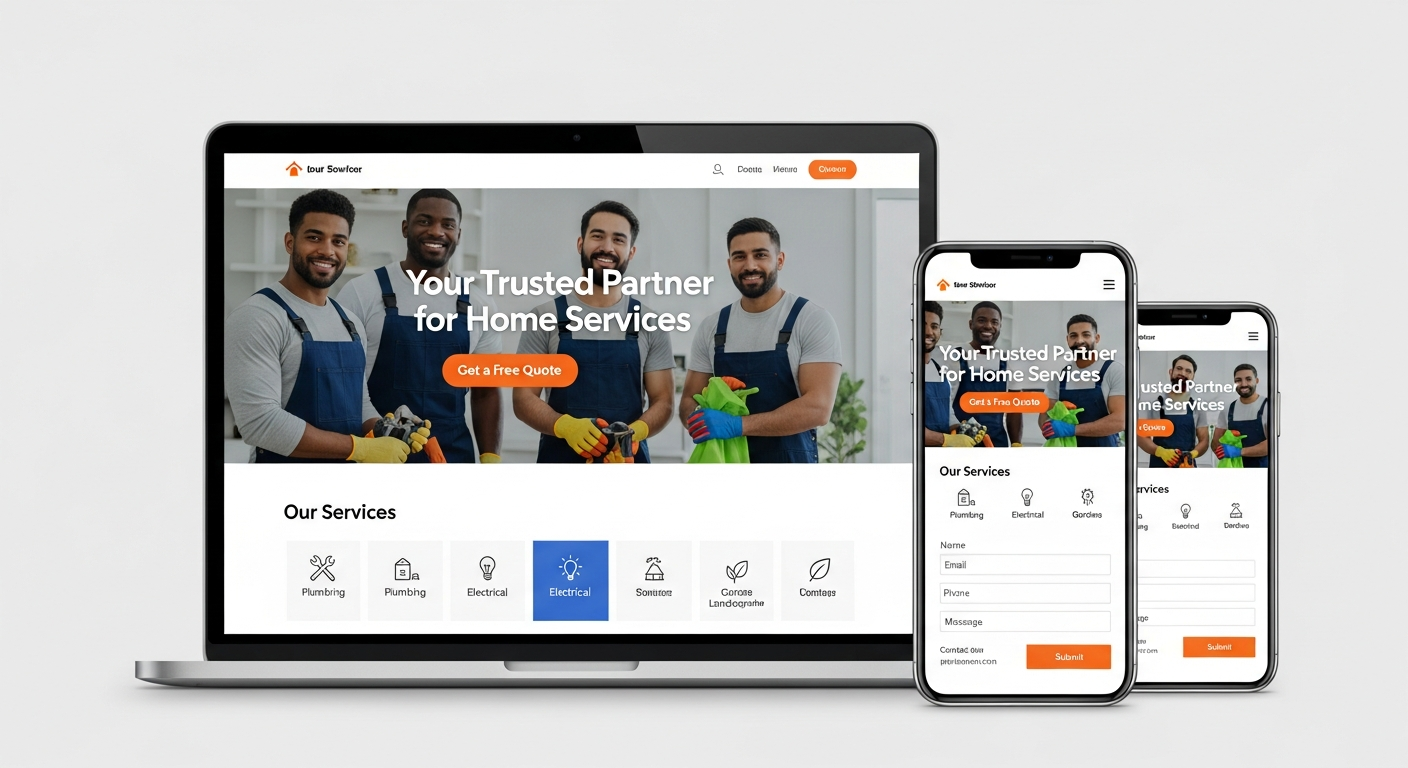
In today's digital-first world, your website is often the first interaction potential customers have with your home service business. Long before they pick up the phone or request a quote, they're evaluating your professionalism, credibility, and trustworthiness based on what they see online. A poorly designed website doesn't just look bad—it actively drives customers to your competitors.
Conversely, a strategically designed, high-converting website works like a tireless salesperson, generating leads 24 hours a day, 7 days a week. It builds trust before the first phone call, qualifies prospects, and positions your business as the obvious choice in your market.
Why Your Website Matters More Than Ever
Consider these statistics about how consumers find and choose home service providers:
- 97% of consumers search online to find local businesses
- 75% of users judge a company's credibility based on their website design
- 88% of online visitors won't return after a bad website experience
- Mobile devices account for over 60% of local service searches
Your website isn't just a digital business card—it's a critical business asset that directly impacts revenue. For home service businesses specifically, a well-optimized website can be the difference between a steady stream of qualified leads and constantly struggling to find new customers.
The Anatomy of a High-Converting Home Service Website
1. Professional, Trust-Building Design
First impressions happen in milliseconds. Research shows visitors form opinions about your website within 0.05 seconds—before they've read a single word. Your design must instantly communicate professionalism and trustworthiness.
Key design elements for home service websites include:
- Clean, modern layout: Avoid cluttered designs with too many colors, fonts, or competing elements
- High-quality imagery: Use professional photos of your team, equipment, and completed work—not generic stock photos
- Consistent branding: Your logo, colors, and messaging should match across all pages and marketing materials
- White space: Strategic empty space makes content easier to read and more professional
- Trust indicators: Display licenses, certifications, insurance badges, and association memberships prominently
Your design should reflect the quality of service you provide. If your website looks cheap or outdated, customers will assume your work is too.
2. Mobile-First Experience
Most customers searching for home services are on their phones—often while dealing with an emergency like a burst pipe or broken AC. If your website doesn't work perfectly on mobile devices, you're losing these customers.
Mobile optimization includes:
- Responsive design: The site automatically adjusts to any screen size
- Touch-friendly buttons: Large, easy-to-tap call-to-action buttons
- Click-to-call: Phone numbers that dial when tapped
- Fast loading: Mobile users expect pages to load in 3 seconds or less
- Simplified navigation: Easy-to-use mobile menus
Google also prioritizes mobile-friendly websites in search results, so mobile optimization directly impacts your visibility.
3. Clear Value Proposition
Within seconds of landing on your homepage, visitors should understand:
- What services you provide
- What areas you serve
- Why they should choose you over competitors
Your value proposition should be front and center—typically in the hero section at the top of your homepage. Avoid generic statements like "Quality Service" that could apply to any business. Instead, be specific about what makes you different:
- "Same-Day Emergency Plumbing Service in [City]"
- "Licensed, Insured HVAC Experts with 24/7 Availability"
- "Family-Owned Since 1985—Over 10,000 Satisfied Customers"
4. Strategic Calls-to-Action
Every page on your website should have a clear purpose and guide visitors toward taking action. Effective calls-to-action (CTAs) for home service websites include:
- Request a Quote: Forms that capture project details
- Call Now: Click-to-call buttons for immediate contact
- Schedule Service: Online booking functionality
- Get a Free Estimate: Low-commitment first step for prospects
CTAs should be:
- Visible without scrolling (above the fold)
- Repeated throughout longer pages
- Action-oriented ("Get Your Free Quote" instead of "Submit")
- Visually prominent with contrasting colors
Don't make visitors hunt for how to contact you. The easier you make it, the more leads you'll generate.
5. Service Pages That Sell
Each service you offer deserves its own dedicated page. This serves two purposes: it helps with SEO (ranking for specific service searches) and provides detailed information for prospects researching their options.
Effective service pages include:
- Descriptive headline: "Professional Air Conditioning Repair in [City]"
- Problem-focused opening: Address the customer's pain points
- Solution explanation: How you solve their problem
- Service details: What's included, process overview, timeframes
- Pricing information: Even general ranges help set expectations
- Before/after photos: Visual proof of your work quality
- Customer testimonials: Social proof specific to that service
- Clear CTA: Request quote or schedule service button
Avoid thin, generic pages. Google rewards in-depth, helpful content, and customers appreciate detailed information when making decisions.
6. Social Proof and Reviews
Nothing builds trust faster than seeing that other customers have had positive experiences. Incorporate social proof throughout your website:
- Testimonials: Featured customer quotes with names and photos
- Review widgets: Display your Google, Yelp, or Facebook ratings
- Case studies: Detailed stories of successful projects
- Customer count: "Trusted by 5,000+ homeowners in [City]"
- Awards and recognition: Industry awards, Best of awards, etc.
Make sure reviews are recent. Old testimonials from five years ago don't carry the same weight as reviews from last month.
7. Local SEO Optimization
For home service businesses, local search visibility is everything. When someone searches "plumber near me" or "HVAC repair [your city]," you need to appear at the top of results.
On-page SEO elements include:
- Location-specific title tags: "Emergency Plumber in [City], [State] | [Business Name]"
- Meta descriptions: Compelling summaries with location keywords
- Header tags: H1, H2, H3 tags with relevant keywords
- Service area pages: Dedicated pages for each city or neighborhood you serve
- NAP consistency: Name, address, phone number matching across all pages
- Schema markup: Structured data that helps search engines understand your business
Local SEO is an ongoing effort, but starting with a properly optimized website foundation is essential.
Website Speed: The Silent Conversion Killer
Website speed dramatically impacts both user experience and search rankings. Studies show:
- 53% of mobile visitors leave if a page takes more than 3 seconds to load
- Every 1-second delay reduces conversions by 7%
- Slow websites are penalized in Google search rankings
Common speed issues for home service websites include:
- Unoptimized images (too large file sizes)
- Cheap hosting with slow servers
- Too many plugins or scripts
- No caching or CDN implementation
Test your website speed using Google's PageSpeed Insights and address any issues identified. A fast website isn't just nice to have—it's essential for conversions.
Lead Capture Forms That Convert
Your contact forms are where visitors become leads. Optimize them for maximum conversions:
- Keep forms short: Only ask for essential information. Name, phone, email, and brief description of need is usually enough.
- Use smart fields: Dropdown menus and checkboxes are easier than typing
- Show the value: "Get Your Free Quote in 24 Hours" is more compelling than "Submit"
- Remove friction: Don't require account creation or CAPTCHA puzzles
- Confirm submission: Show a thank-you message and set expectations for response time
Consider offering multiple contact options—some people prefer calling while others prefer filling out forms. Accommodate both preferences.
Content That Establishes Authority
Beyond service pages, educational content positions you as an expert and helps with SEO:
- Blog posts: Tips, guides, and seasonal advice related to your services
- FAQ pages: Answer common customer questions
- Resource guides: "The Homeowner's Guide to HVAC Maintenance"
- Video content: How-to videos, project showcases, company introductions
Content marketing takes time to show results, but it builds long-term value by attracting organic search traffic and establishing your expertise.
Tracking and Analytics
You can't improve what you don't measure. Essential tracking for home service websites includes:
- Google Analytics: Understand traffic sources, user behavior, and page performance
- Google Search Console: Monitor search visibility and fix technical issues
- Call tracking: Know which marketing efforts generate phone calls
- Form tracking: Monitor conversion rates and form abandonment
- Heatmaps: See how users interact with your pages
Review your data regularly to identify what's working and what needs improvement.
Common Website Mistakes to Avoid
Many home service websites make these critical errors:
- No clear CTA: Visitors don't know what to do next
- Hidden contact info: Phone number buried in footer or contact page only
- Generic stock photos: Using images that could be any company
- No mobile optimization: Site doesn't work properly on phones
- Outdated content: Old blog posts, discontinued services, or dated design
- Slow loading: Large images and poor hosting killing performance
- Missing trust signals: No reviews, testimonials, or credentials displayed
- Thin content: Service pages with just a paragraph of text
Audit your website against this list and address any issues you find.
DIY vs. Professional Website Development
While DIY website builders like Wix or Squarespace have made it easier than ever to create a basic website, there are limitations to consider:
DIY Advantages:
- Lower upfront cost
- Quick to launch
- Easy to make basic updates
DIY Limitations:
- Template constraints limit customization
- SEO capabilities often limited
- Performance may not be optimized
- Professional design difficult to achieve
- Integration with business tools may be limited
For businesses serious about growth, investing in a professionally designed website typically delivers stronger results and better ROI over time.
Getting Started
Whether you're building a new website or improving an existing one, start by auditing your current situation:
- How does your site look on mobile devices?
- How fast does it load?
- Is your value proposition clear immediately?
- Can visitors easily contact you from every page?
- Are you showing social proof and trust signals?
- Do you have dedicated pages for each service?
Identify the biggest gaps and prioritize addressing those first. Even small improvements can lead to meaningful increases in leads and conversions.
Transform Your Website, Transform Your Business
Your website is working for you right now—the question is whether it's helping or hurting your business. A strategic, professionally designed website generates qualified leads around the clock, builds trust before the first conversation, and positions you as the premier choice in your market.
At HSP Automation, we specialize in building high-converting websites specifically for home service businesses. We understand your industry, your customers, and what it takes to turn website visitors into paying customers.
Contact us today for a free website audit and discover how we can help transform your online presence.