January 9, 2026
How Automation Improves Customer Experience Without Feeling Robotic
Automation improves customer experience by delivering faster responses, clearer communication, and fewer mistakes. Learn how service businesses use automation without losing the human touch.
Written by Frankwin Hooglander
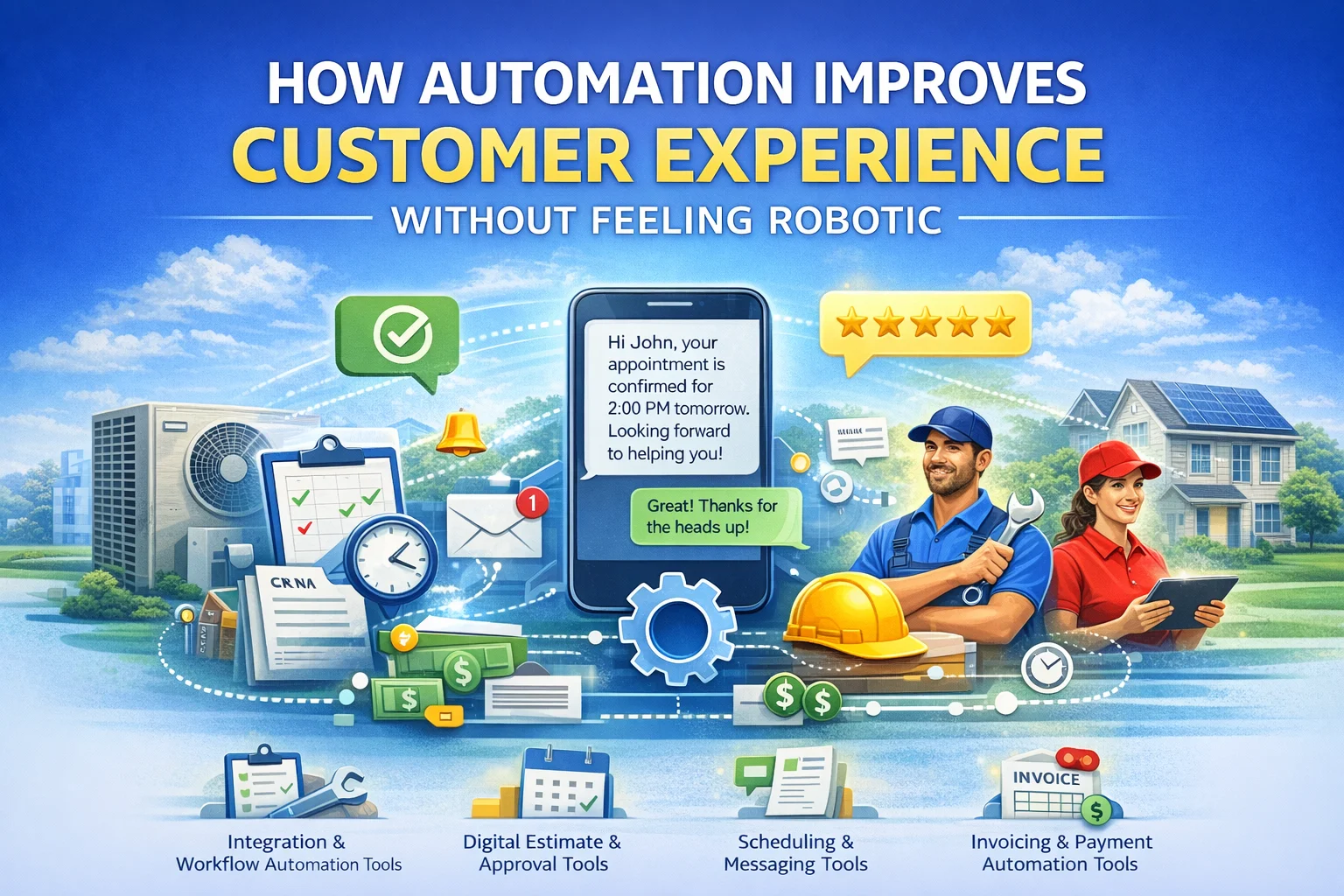
Many home service business owners worry that automation will make their company feel cold or impersonal. They picture robotic messages, awkward timing, and customers feeling like just another number.
In reality, the opposite is often true.
When automation is done correctly, it improves customer experience by removing frustration, delays, and confusion. Customers feel more informed, respected, and taken care of. The human element does not disappear. Instead, it becomes more consistent.
This article explains how automation improves customer experience across home service industries such as HVAC, plumbing, cleaning, electrical, roofing, landscaping, and more—without ever feeling robotic.
Why Customer Experience Matters More Than Ever
Customers today expect fast responses and clear communication. They want to know their request was received. They want to know when someone is coming. They want updates when plans change.
When those expectations are not met, frustration builds quickly. Missed calls, unclear scheduling, and forgotten follow-ups damage trust, even when the actual service work is excellent.
Automation helps meet modern expectations while preserving the personal feel customers value.
Faster Responses Build Immediate Trust
One of the biggest frustrations for customers is silence. When they submit a form or leave a voicemail, they want acknowledgment.
Automation solves this by responding instantly. A short confirmation message reassures customers that their request matters. Even if a human response comes later, that first touchpoint sets the tone.
This is especially important for emergency services like plumbing, HVAC, and locksmith work. However, it also matters for non-emergency services such as cleaning, landscaping, and power washing.
Speed creates confidence. Automation delivers speed.
Clear Scheduling Reduces Anxiety
Customers often feel anxious when they do not know what to expect. Vague arrival windows and last-minute changes create stress.
Automation improves this experience by sending appointment confirmations, reminders, and arrival updates. Customers know when to expect service and feel prepared.
For window cleaning, pool service, and recurring maintenance businesses, this predictability is critical. For roofing, tree service, and solar installation projects, it helps customers feel informed throughout longer timelines.
Clear scheduling makes businesses feel reliable and professional.
Consistent Communication Feels More Human
Ironically, inconsistency is what makes businesses feel robotic. When messages are sent sometimes but not others, customers feel ignored.
Automation creates consistency. Messages go out every time, in the same clear tone, at the right moments. This consistency builds trust and reduces confusion.
For cleaning and pest control businesses, consistent updates reinforce reliability. For handyman and appliance repair businesses, they prevent unnecessary follow-up calls.
Customers do not feel automated. They feel informed.
Fewer Mistakes Improve Confidence
Manual processes lead to mistakes. Appointments get missed. Invoices are delayed. Follow-ups are forgotten.
Automation reduces these errors by handling repeat tasks the same way every time. When systems work smoothly, customers notice.
A plumbing customer receiving a prompt invoice feels respected. A roofing customer receiving timely project updates feels confident. A solar installation customer receiving steady communication stays engaged during long decision cycles.
Reliability is a major part of customer experience, and automation strengthens it.
Automation Supports, Not Replaces, Human Interaction
Automation works best when it handles the background tasks. Humans handle conversations, decisions, and exceptions.
When automation manages confirmations, reminders, and updates, staff have more time to answer questions and provide thoughtful service. Conversations feel calmer and more focused.
This balance is especially valuable for service businesses that rely on trust, such as electrical work, HVAC maintenance, and home repairs.
Automation creates space for better human interaction.
Reviews and Follow-Ups Feel More Natural
Asking for reviews is part of customer experience. However, it is often forgotten or handled awkwardly.
Automation sends review requests at the right time, when customers are most satisfied. Because the request feels timely and expected, it does not feel pushy.
For cleaning, landscaping, window cleaning, and pool service businesses, this steady flow of reviews strengthens reputation and trust.
Customers appreciate being asked in a simple, respectful way.
How Automation Adapts Across Home Service Industries
In HVAC and plumbing, automation reassures customers during stressful situations. In cleaning and pest control, it reinforces consistency. In roofing and solar installation, it maintains engagement over long timelines. In landscaping and tree service, it improves coordination and expectations.
The tools may be the same, but the experience adapts to the trade.
That flexibility is what keeps automation from feeling robotic.
Getting the Tone Right
The tone of automated messages matters. Clear language, friendly wording, and helpful information make all the difference.
Automation should sound like your business. It should reflect how you speak to customers in real life. When that tone is set correctly, customers rarely realize automation is involved.
They simply experience better service.
Final Thoughts
Customer experience is built on communication, reliability, and trust. Automation strengthens all three when used correctly.
It does not remove the human element. Instead, it supports it by handling the repetitive work that causes frustration and delays.
For modern home service businesses, automation is no longer just about efficiency. It is about delivering a better experience without losing what makes the business personal.
That balance is where long-term growth comes from.