January 10, 2026
How Long It Takes to See ROI From Automation in a Home Service Business
Automation ROI often appears faster than expected. Learn how long it takes home service businesses to see real returns from automation and why results compound over time.
Written by Frankwin Hooglander
One of the most common questions home service business owners ask about automation is simple.
“How long before this actually pays off?”
It is a fair question. Automation requires time, planning, and trust. Owners want to know when the investment turns into real results.
The answer depends on how automation is implemented. However, across HVAC, plumbing, cleaning, electrical, roofing, landscaping, and other service industries, the pattern is remarkably consistent.
ROI from automation often appears faster than expected.
Why Automation ROI Feels Uncertain at First
Automation does not always feel productive on day one. Early effort is spent setting up systems, adjusting workflows, and learning how tools behave.
During this phase, owners may feel like they are doing more work instead of less. That feeling is temporary.
Automation is front-loaded. The effort comes first. The payoff follows.
Understanding the timeline helps set realistic expectations and prevents frustration.
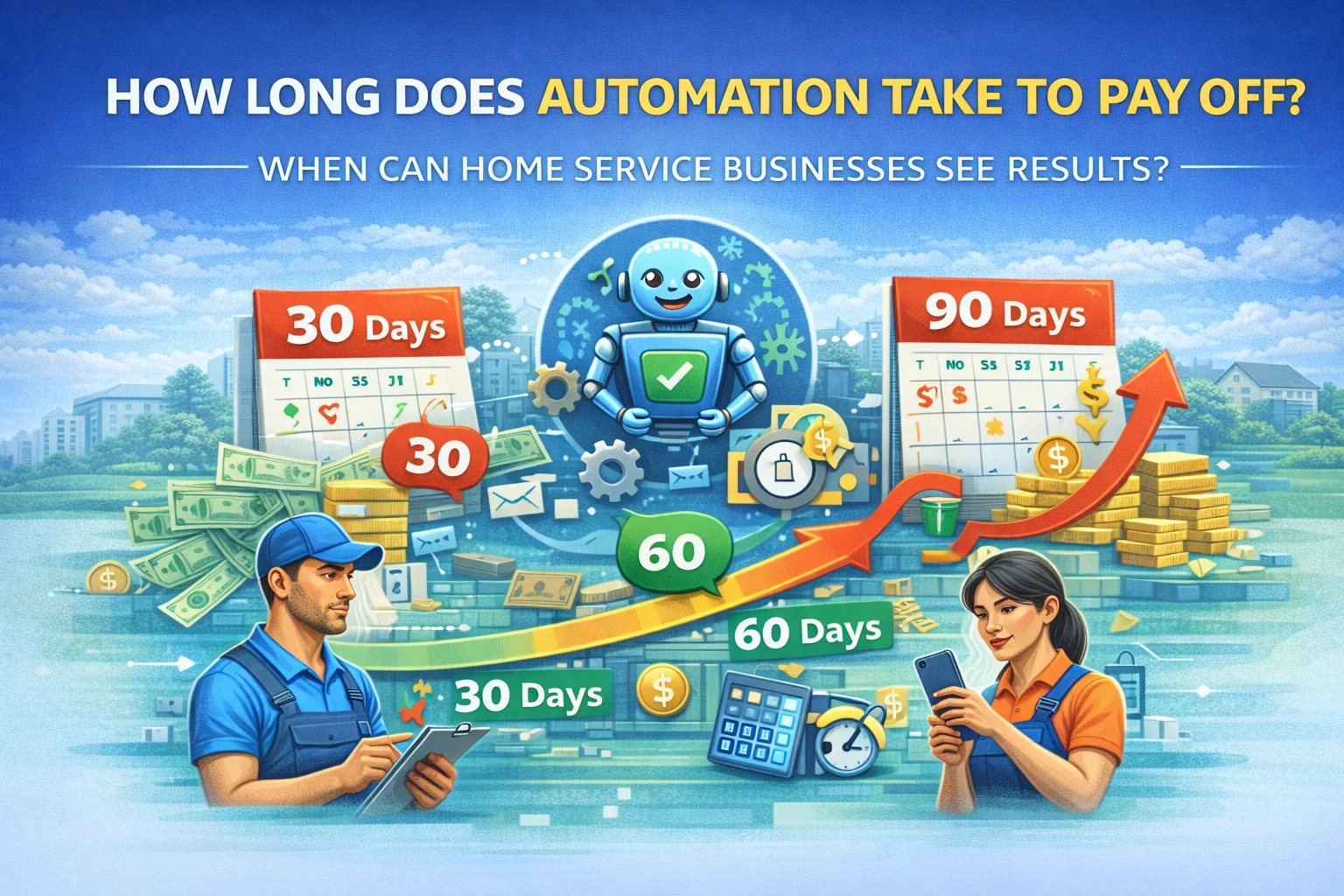
The First 30 Days: Immediate Time Savings
Most businesses begin seeing ROI within the first month. The earliest gains usually come from automation that handles daily tasks.
Missed call responses, appointment confirmations, follow-ups, and invoicing start running automatically. These changes reduce interruptions and mental load almost immediately.
Owners often notice fewer late nights and fewer things slipping through the cracks. While revenue impact may still be building, time savings show up quickly.
For many businesses, time is the first form of ROI.
The 30–60 Day Window: Revenue Protection and Recovery
As automation settles in, the next stage of ROI becomes clear. Leads that were once missed are now captured. Follow-ups that were once forgotten now happen consistently.
This is where revenue protection begins.
HVAC, plumbing, and electrical businesses often see gains here because faster responses win jobs. Cleaning, pest control, and pool service businesses notice improved retention because communication becomes consistent. Roofing and solar installation businesses see stalled estimates move forward.
At this stage, automation starts paying for itself.
The 60–90 Day Mark: Measurable Financial ROI
By the third month, automation impact becomes measurable. More jobs are booked. Fewer opportunities are lost. Payments arrive faster.
This is when many owners realize automation is doing the work of an additional staff member without adding payroll.
Revenue increases do not always come from doing more work. Often, they come from losing less work.
At this point, ROI shifts from “this feels better” to “this is clearly profitable.”
Long-Term ROI: Compounding Gains Over Time
Automation does not stop delivering value after the first few months. In fact, its biggest impact is long-term.
As volume increases, automation scales without extra cost. Whether the business handles ten jobs a week or one hundred, the system continues working.
Over time, automation reduces the need for reactive hiring, lowers admin overhead, and stabilizes growth. This compounding effect is why automation outperforms manual processes year after year.
The longer automation runs, the higher the return.
Why Some Businesses See ROI Faster Than Others
Businesses that automate daily tasks first see results the fastest. These tasks happen frequently, so even small improvements add up quickly.
Clear workflows also speed ROI. When processes are defined, automation works smoothly from the start.
Finally, businesses that prioritize customer communication see faster gains. Faster responses and clearer updates directly influence booking rates and reviews.
Automation ROI depends more on strategy than industry.
How Automation ROI Looks Across Home Service Industries
In HVAC and plumbing, ROI often appears during peak seasons when fast response wins urgent jobs. In cleaning and recurring services, ROI shows up through retention and reduced admin time. In roofing and solar installation, ROI appears as long sales cycles shorten. In landscaping and tree service, ROI comes from smoother seasonal operations.
Different industries. Same timeline.
Automation works because it supports how service businesses already operate.
What Automation ROI Is Not
Automation ROI is not instant magic. It does not fix broken processes overnight. It does not replace skilled labor or customer relationships.
What it does is remove friction.
When friction disappears, businesses run better. When businesses run better, ROI follows naturally.
Using ROI Tools to Set Expectations
One of the best ways to understand potential ROI is to model it before implementation. ROI calculators help estimate how much time and revenue automation can recover based on real inputs.
These estimates help owners make confident decisions instead of guessing.
Clarity speeds action.
Final Thoughts
Automation ROI does not take years to appear. For most home service businesses, meaningful results show up within the first few months.
Time savings appear first. Revenue protection follows. Long-term gains compound quietly in the background.
When automation is implemented with intention, the return is not just financial. It is operational, emotional, and sustainable.
That is what makes automation one of the strongest investments a service business can make.