January 8, 2026
Mobile-First Website Design for Home Service Businesses
Most home service customers visit websites on their phones. This post explains why mobile-first website design is essential for conversions, trust, and search rankings, and how mobile experience directly affects lead generation.
Written by Frankwin Hooglander
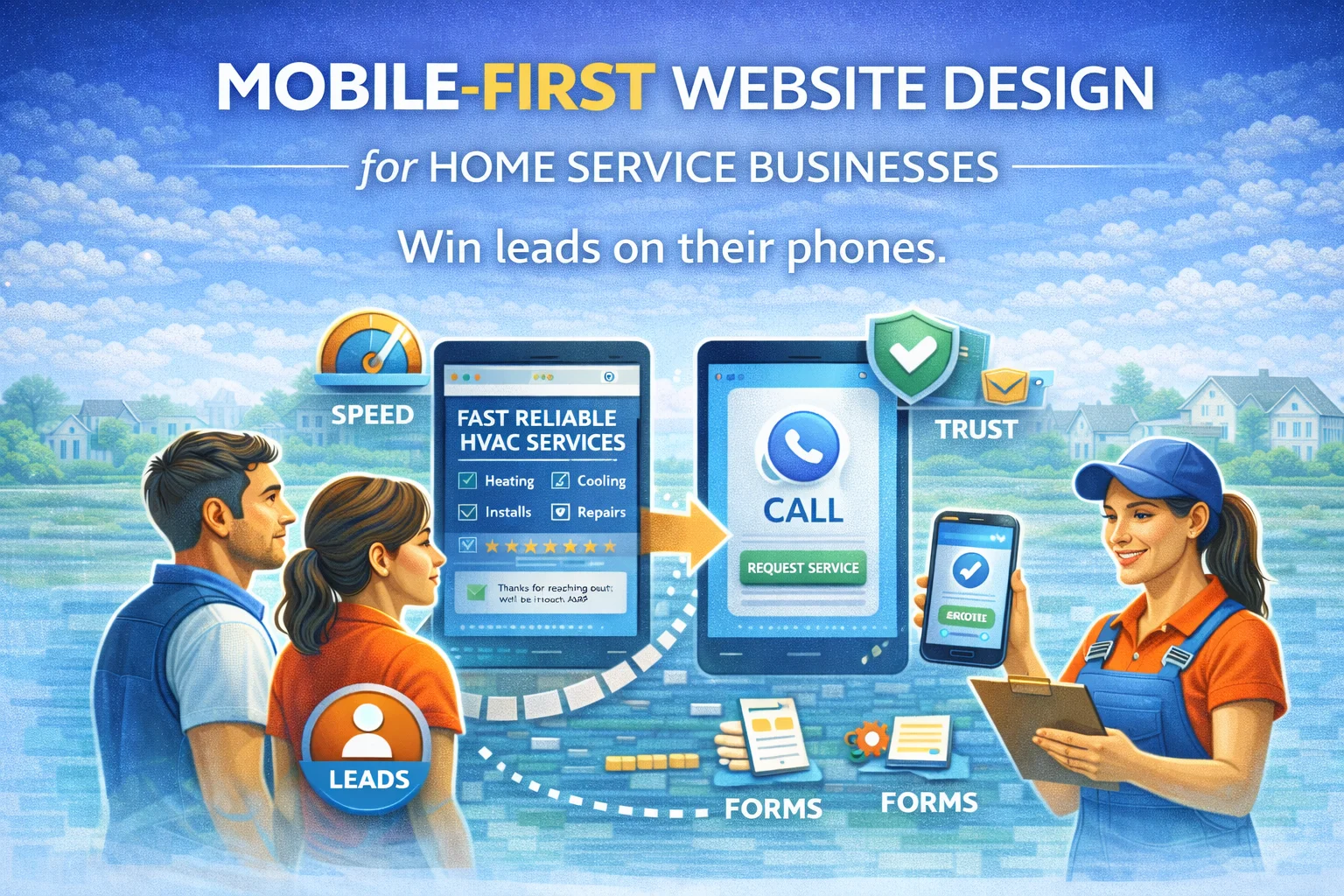
Most home service customers do not sit at a desk when they need help. They search from their phones. They are dealing with a broken system, a messy situation, or an urgent problem. In that moment, patience is limited.
If a website is hard to use on mobile, customers do not wait. They leave and choose another provider.
Mobile-first website design is no longer a trend. It is the default reality for home service businesses. This article explains why mobile-first design matters, how it affects leads and trust, and what service businesses must get right to stay competitive.
How Customers Actually Use Mobile Websites
Mobile visitors behave differently than desktop users. They scan quickly. They look for contact options. They want answers fast.
They are not interested in complex layouts or hidden menus. They want to know if you offer the service they need and how to reach you.
For HVAC, plumbing, electrical, cleaning, roofing, landscaping, and other service businesses, mobile experience often determines whether a lead happens at all.
Why Mobile Experience Directly Affects Conversions
A poor mobile experience creates friction. Buttons that are too small, text that is hard to read, and pages that load slowly all increase frustration.
When frustration increases, conversions drop.
Mobile-first website development removes that friction. Pages load quickly. Navigation is simple. Calls to action are easy to tap. Forms are short and usable.
When the experience feels effortless, visitors take action more often.
Google Treats Mobile as the Primary Version
Search engines evaluate websites based on their mobile version first. If a site performs poorly on mobile, rankings suffer even if the desktop version looks fine.
This makes mobile-first design an SEO requirement, not just a design preference.
For local service businesses competing in crowded markets, mobile performance often separates page one from page two.
Mobile Design Builds Trust Faster
Trust is built quickly or not at all on mobile. Visitors make decisions in seconds.
A clean, fast, and easy-to-use mobile site feels professional. A cluttered or broken mobile site feels risky.
Customers may never consciously analyze why they do not trust a site. They simply move on.
Mobile-first design quietly communicates reliability.
Calls to Action Must Be Obvious on Mobile
On mobile devices, calls to action should always be easy to find. Phone numbers should be tappable. Request forms should be visible without excessive scrolling.
When calls to action are hidden or inconsistent, visitors hesitate. Even motivated customers may abandon the site.
Mobile-first development ensures the next step is always clear.
Forms Must Respect Mobile Attention Spans
Mobile users are less patient with long forms. Excessive fields or confusing layouts cause drop-offs.
Mobile-first websites use short, focused forms that ask only for essential information. This increases completion rates and improves lead quality.
A form that feels easy is far more likely to be completed.
Speed Is Even More Important on Mobile
Mobile connections are often slower or less stable. This makes performance critical.
Slow-loading mobile pages drive visitors away before content is even seen. Speed issues also hurt SEO and increase bounce rates.
Mobile-first development prioritizes performance from the start instead of trying to fix it later.
How Mobile-First Design Supports Automation
Mobile-friendly forms and booking tools integrate cleanly with CRMs and automation systems. This allows leads to flow smoothly into follow-ups, confirmations, and scheduling workflows.
When mobile experience is poor, automation breaks down. Leads abandon forms, and systems never trigger.
A strong mobile site becomes the front door to your automation stack.
How Mobile-First Design Applies Across Industries
In HVAC and plumbing, mobile-first design captures urgent leads. In cleaning and pest control, it supports recurring bookings. In roofing and solar installation, it supports research and follow-ups. In landscaping and tree service, it simplifies seasonal scheduling.
The industry changes. Mobile behavior does not.
Final Thoughts
Mobile-first website design is no longer optional for home service businesses. It affects visibility, trust, and lead generation every day.
A website that works well on mobile works better everywhere. When mobile experience is prioritized, the entire business benefits.
For service businesses that want consistent leads, mobile-first design is the foundation.