January 8, 2026
Signs Your Home Service Business Is Ready for Automation
Missed calls, admin overload, and chaotic growth are signs a service business is ready for automation. Learn when automation becomes necessary and why.
Written by Frankwin Hooglander
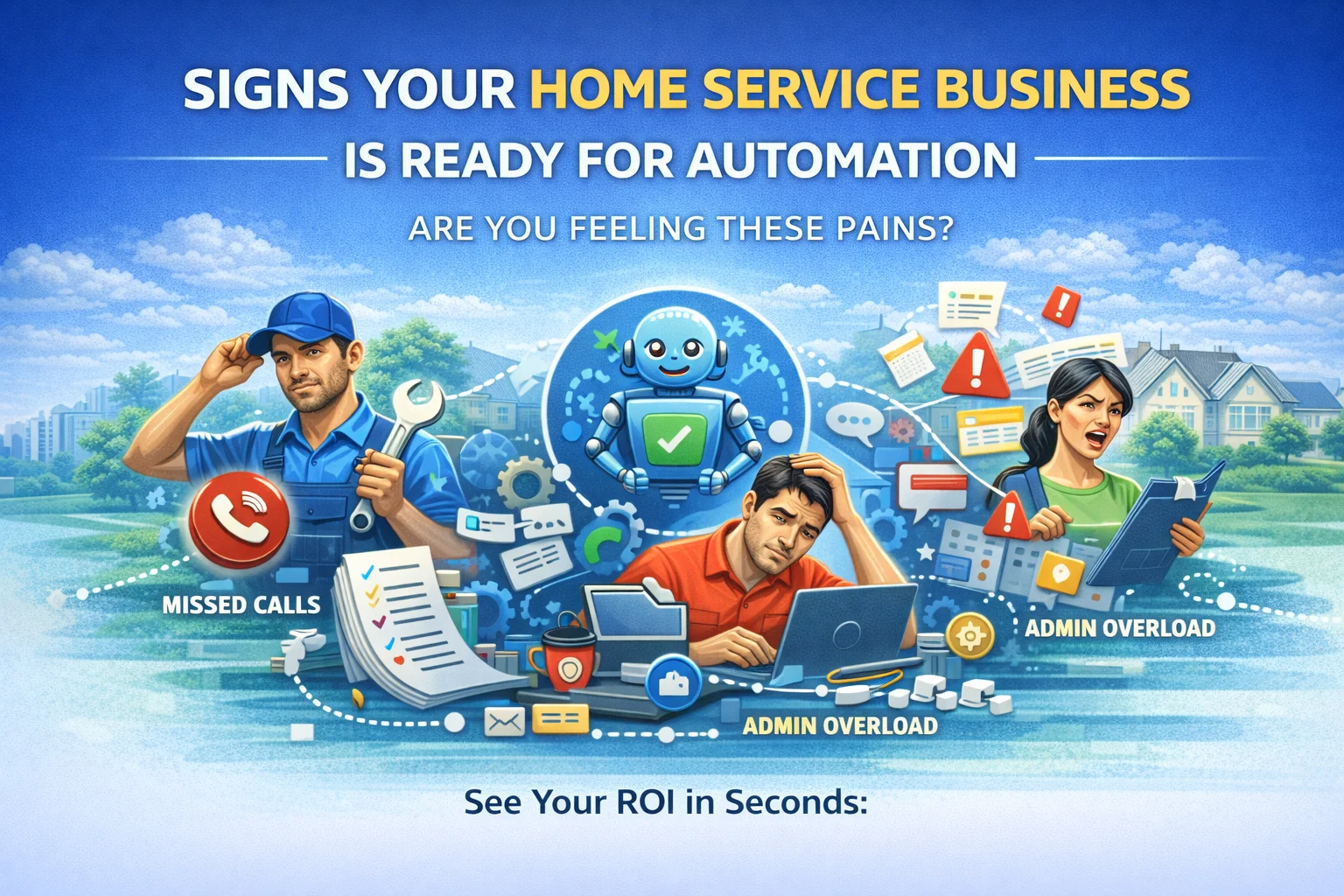
Most home service business owners do not wake up one day and decide they want automation. Instead, they reach a point where running the business feels heavier than it used to. The work is steady, but the pressure never lets up.
Calls come in nonstop. Follow-ups fall behind. Nights and weekends disappear into admin work. Growth starts to feel chaotic instead of exciting.
These are not failures. They are signals.
Automation becomes valuable when a business reaches certain stages. This article explains the clearest signs your home service business is ready for automation and why these signs appear across industries like HVAC, plumbing, cleaning, electrical, roofing, landscaping, and more.
When Missed Calls Start Costing Real Money
Every home service business misses calls. That alone is not the problem. The problem starts when missed calls become missed revenue.
As demand grows, it becomes impossible to answer every call immediately. Customers leave voicemails or submit forms and move on when responses are slow. Over time, this quietly drains revenue.
Automation solves this by responding instantly, even when staff are busy. A quick confirmation message reassures customers and buys time for a human response. When missed calls turn into captured leads, the business is ready for automation.
When Follow-Ups Feel Impossible to Keep Up With
Follow-ups often start strong and slowly fade. At first, owners remember to check in with every lead and customer. As volume increases, follow-ups become inconsistent or disappear entirely.
This creates stalled estimates, unfinished conversations, and lost opportunities. It also creates stress because owners know what should be happening but cannot keep up.
Automation restores consistency. When follow-ups happen automatically, nothing is forgotten. This is a clear sign automation is no longer optional.
When Admin Work Takes Over Evenings and Weekends
Many service business owners finish fieldwork only to start office work. Invoicing, scheduling, reminders, and emails fill nights and weekends.
This is often the moment owners realize the business is running them instead of the other way around.
Automation reduces this burden by handling repetitive admin tasks in the background. When personal time disappears because of manual work, the business is ready for better systems.
When Growth Creates More Chaos Instead of More Profit
Growth should feel rewarding. However, without systems, growth creates confusion. More jobs mean more mistakes, more stress, and more fires to put out.
Automation stabilizes growth. It keeps communication clear, schedules organized, and workflows predictable. When growth feels overwhelming instead of exciting, automation becomes necessary.
When Customers Ask the Same Questions Repeatedly
Customers often ask similar questions. They want to know if their appointment is confirmed, when someone will arrive, or whether payment was received.
Answering these questions manually takes time and attention. Automation handles them automatically through confirmations, reminders, and updates.
When staff spend too much time answering predictable questions, automation is the obvious next step.
When Hiring Feels Risky or Premature
Many businesses hesitate to hire because payroll feels risky. At the same time, the workload feels unmanageable.
Automation fills the gap between being overwhelmed and being ready to hire. It handles repeat tasks without adding long-term overhead.
When hiring feels necessary but risky, automation often provides relief at a lower cost.
How These Signs Appear Across Home Service Industries
In HVAC and plumbing, these signs show up during peak seasons. In cleaning and pest control, they appear as recurring work expands. In roofing and solar installation, long sales cycles make follow-ups difficult. In landscaping and tree service, seasonality creates unpredictable workloads.
Different industries experience different pressures, but the signals are the same.
Automation readiness is about operational strain, not business size.
What Happens After Automation Is Introduced
When automation is added at the right time, businesses notice immediate improvements. Leads receive faster responses. Schedules stay organized. Follow-ups happen consistently. Admin work shrinks.
Most importantly, owners regain control.
Automation does not replace hard work. It supports it.
Final Thoughts
Automation works best when it is introduced at the right stage. The signs are not subtle. Missed calls, lost follow-ups, admin overload, and chaotic growth all point to the same conclusion.
When these signals appear, automation becomes a tool for stability and clarity.
Recognizing readiness is the first step. Acting on it is what changes the business.