January 4, 2026
Website Development for Home Service Businesses: How to Build a Site That Actually Gets Leads
A home service business website should do more than look good. This guide explains how proper website development builds trust, generates leads, and supports long-term growth. Learn what actually matters when building a site that works as part of your business.
Written by Frankwin Hooglander
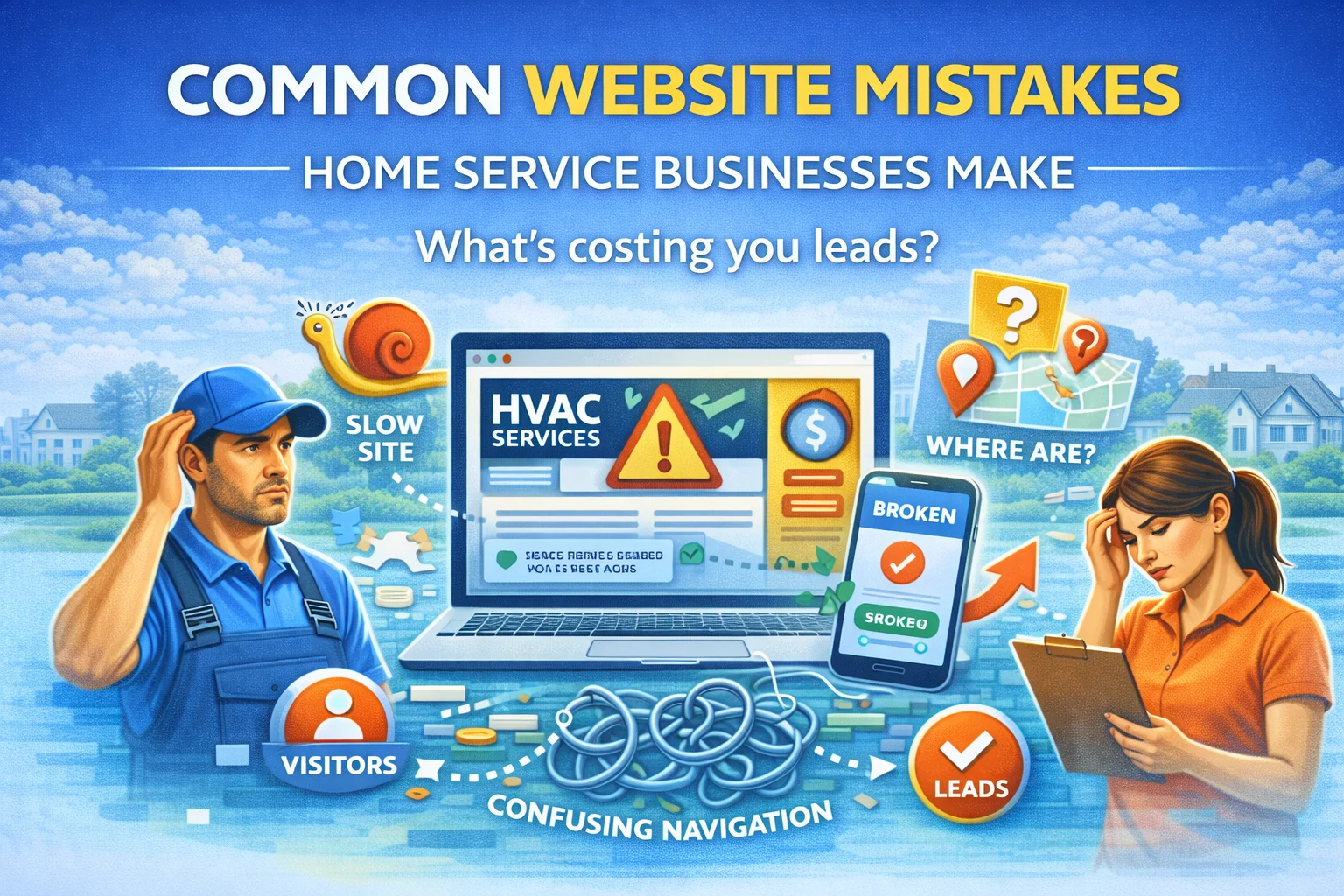
A website should be more than an online brochure. For a home service business, it should work like a 24/7 sales rep. It should answer questions, build trust, and turn visitors into booked jobs.
Unfortunately, many service business websites do not do this. They look fine on the surface, but they fail where it matters most. They load slowly. They confuse visitors. They do not guide people toward taking action.
Website development is not about design alone. It is about building a system that supports how customers actually choose service providers today.
This guide explains what effective website development looks like for home service businesses and why it is one of the most important tools for long-term growth.
Why Your Website Is Often the First Impression
Before customers call, they visit your website. They check services, reviews, photos, and contact options. In many cases, they decide whether to trust you before ever picking up the phone.
If the site feels outdated, slow, or confusing, confidence drops instantly. Customers may never reach out, even if your services are excellent.
A strong website builds credibility quietly. It reassures visitors that your business is legitimate, professional, and reliable.
For HVAC, plumbing, electrical, cleaning, roofing, landscaping, and other home service industries, that first impression matters more than ever.
What Website Development Really Means for Service Businesses
Website development is not just about how a site looks. It is about structure, speed, clarity, and conversion.
A well-developed site guides visitors naturally. It explains what you do, who you serve, and how to get started. It removes friction instead of creating it.
For service businesses, development must support real behavior. Customers are often stressed, in a hurry, or comparing multiple providers. A clear and fast website helps them decide quickly.
Good development makes the next step obvious.
How Customers Actually Use Service Business Websites
Most visitors do not read every page. They scan. They look for answers to simple questions.
They want to know if you offer the service they need, whether you serve their area, and how fast they can get help. They look for reviews, photos, and proof of reliability.
If that information is hard to find, visitors leave.
Website development should be built around this reality. Clear navigation, focused service pages, and visible calls to action keep users engaged.
Why Lead-Focused Websites Outperform “Pretty” Websites
A beautiful website that does not generate leads is expensive decoration. A lead-focused website prioritizes action.
That means clear contact options, fast-loading pages, mobile optimization, and messaging that speaks directly to customer needs.
For home service businesses, lead generation is the goal. Website development should support booking, calls, and form submissions without distraction.
When a site is built for conversion, traffic becomes opportunity.
The Role of SEO in Website Development
Search engine optimization starts with development. Site structure, page speed, mobile responsiveness, and content layout all affect rankings.
A well-developed site gives search engines clarity. It helps Google understand what services you offer and where you offer them.
For service businesses competing locally, SEO-focused development is critical. Without it, even great content struggles to rank.
Website development and SEO should work together, not separately.
Why Mobile Experience Matters More Than Desktop
Most service business traffic comes from mobile devices. Customers search from their phones during emergencies, breaks, or while comparing options.
If a site is slow or difficult to use on mobile, leads disappear quickly.
Effective website development prioritizes mobile experience. Buttons are easy to tap. Pages load fast. Contact options are always visible.
Mobile-first design is no longer optional.
How Websites Support Automation and Systems
A modern website is not a standalone tool. It connects to scheduling, CRM systems, forms, and automation workflows.
When a visitor fills out a form or books a service, that action should trigger follow-ups, confirmations, and internal workflows automatically.
Website development plays a key role in making automation possible. Without proper structure, systems break or require manual work.
A strong website becomes the front door to your entire operation.
When Website Development Becomes a Growth Bottleneck
Many businesses outgrow their websites without realizing it. The site worked when volume was low, but now it cannot support growth.
Forms break. Pages are outdated. Content no longer reflects current services. SEO performance stalls.
At this stage, the website limits growth instead of supporting it.
Recognizing this moment is key. Updating or rebuilding the site restores momentum.
Final Thoughts
Website development is one of the most important investments a home service business can make. It influences trust, visibility, and lead flow every single day.
A strong website does not just look good. It works hard behind the scenes, guiding visitors, supporting systems, and generating real results.
When built correctly, a website becomes a core growth asset instead of a forgotten expense.