January 5, 2026
What Makes a Home Service Business Website Convert Visitors Into Leads
A converting website removes friction and builds trust. Learn what makes home service business websites turn visitors into real leads.
Written by Frankwin Hooglander
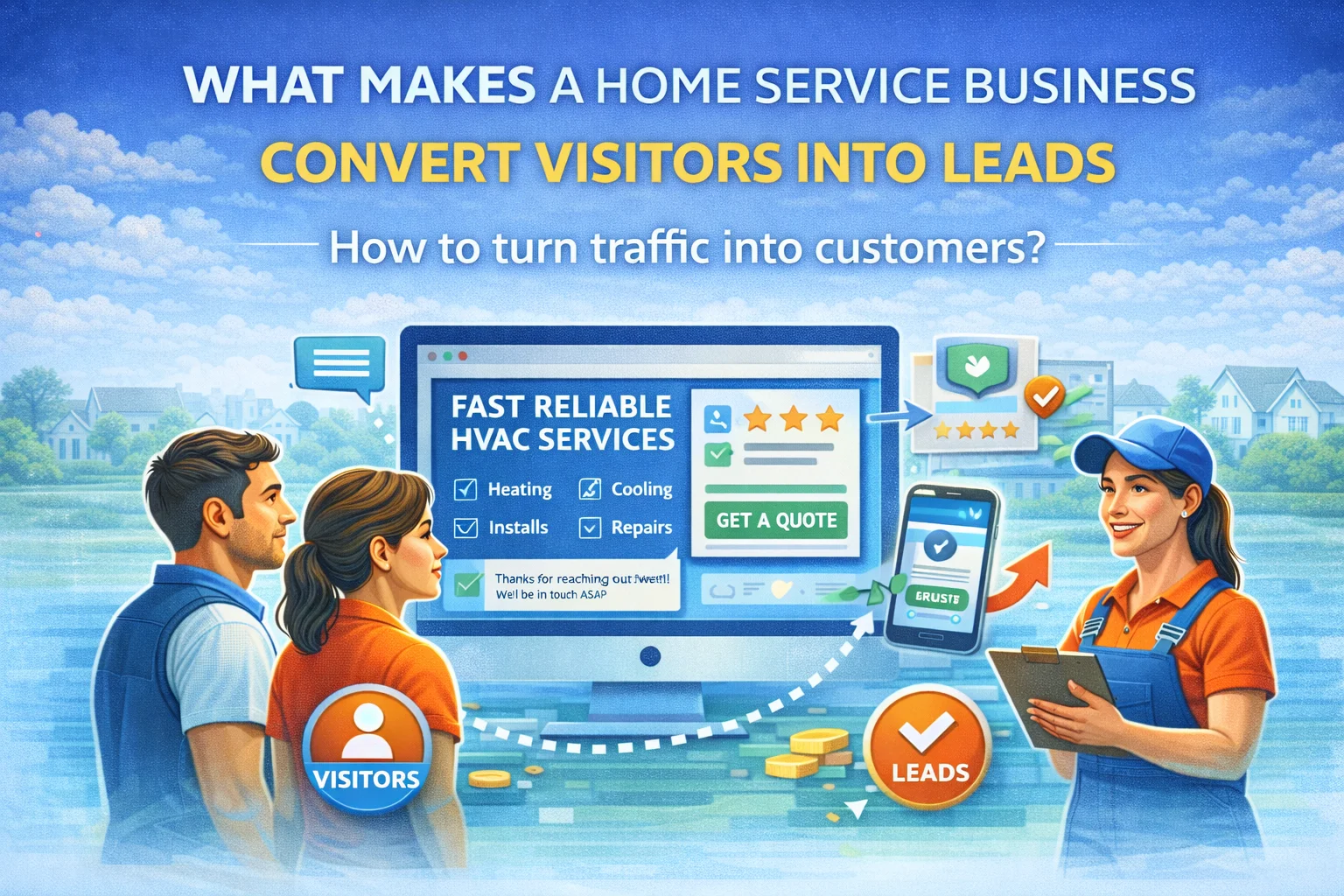
Many home service businesses have websites that look professional but fail to produce results. Traffic comes in, visitors browse briefly, and then they leave without calling or filling out a form.
This is not a traffic problem. It is a conversion problem.
A converting website does more than exist online. It guides visitors toward action. It removes hesitation, builds trust quickly, and makes the next step feel obvious and easy.
This article explains what actually makes a home service business website convert visitors into leads and why conversion-focused website development matters more than design alone.
Why Website Traffic Alone Is Not Enough
Getting visitors to a website is only half the battle. If those visitors do not take action, the site becomes a missed opportunity.
Home service customers often arrive with urgency. They are looking for help, not inspiration. When a website does not guide them clearly, they move on to the next option.
A high-converting website understands intent. It meets visitors where they are and moves them forward with clarity and confidence.
Clear Messaging Builds Instant Understanding
Visitors should understand what a business does within seconds of landing on a website. If messaging is vague or overly clever, confusion sets in.
Clear headlines, service-focused language, and location clarity matter. Customers want to know if you offer the service they need and whether you serve their area.
For HVAC, plumbing, electrical, cleaning, roofing, and landscaping businesses, clarity creates trust. When visitors immediately understand what you do, they are more likely to reach out.
Strong Calls to Action Reduce Hesitation
A converting website does not make visitors guess what to do next. Calls to action guide behavior gently but clearly.
Phrases like “Schedule Service,” “Get a Quote,” or “Request Service” remove uncertainty. They give visitors permission to act.
When calls to action are visible and consistent, visitors feel supported instead of pressured. This is especially important for service businesses where customers may already feel stressed.
Trust Signals Remove Doubt
Trust is the deciding factor for most home service customers. They want reassurance before making contact.
Reviews, testimonials, photos of real work, and clear contact information all contribute to credibility. When these elements are missing or hidden, hesitation increases.
A well-developed website places trust signals naturally throughout the experience. Visitors do not have to search for proof. It is presented clearly and confidently.
Mobile Experience Drives Most Conversions
Most service business leads come from mobile devices. Customers search from their phones when problems arise.
If a website is slow, hard to navigate, or difficult to use on mobile, conversions drop sharply. Buttons must be easy to tap. Forms must be simple. Contact options must always be visible.
Mobile-friendly development is not a bonus feature. It is the foundation of conversion.
Speed Matters More Than Design Trends
A slow website loses leads quickly. Visitors will not wait for pages to load, especially during emergencies.
Website development that prioritizes performance keeps users engaged. Fast load times create a smoother experience and reduce bounce rates.
Search engines also favor faster sites, which improves visibility and traffic quality over time.
Forms Should Feel Easy, Not Demanding
Forms are a critical conversion point. When forms feel long or intrusive, visitors hesitate.
A converting website asks only for essential information. It reassures visitors that someone will follow up promptly. It does not overwhelm them with unnecessary fields.
Simple forms increase completion rates and improve lead quality.
Consistent Structure Builds Confidence
Consistency matters. Fonts, colors, layout, and messaging should feel cohesive across the site.
When a website feels inconsistent, visitors subconsciously question professionalism. A consistent structure creates confidence and makes navigation intuitive.
Good website development ensures every page supports the same goal and tone.
Conversion Is About Removing Friction
At its core, conversion-focused website development removes friction. It answers questions before they are asked. It reduces effort. It makes action feel safe.
Visitors should never feel stuck or unsure. When friction disappears, leads increase naturally.
How Conversion-Focused Websites Support Growth
A converting website works around the clock. It captures leads during business hours and after hours. It supports automation, follow-ups, and scheduling systems behind the scenes.
This turns the website into an active part of operations instead of a static asset.
For growing home service businesses, this support is essential.
Final Thoughts
A website does not need to be flashy to convert. It needs to be clear, fast, trustworthy, and easy to use.
When website development focuses on conversion, traffic becomes opportunity. Visitors become leads. Leads become customers.
That is what separates websites that look good from websites that actually grow businesses.