January 9, 2026
When It’s Time to Redesign Your Home Service Business Website
Websites quietly fall behind as businesses grow. This post explains the signs that show when a home service business website needs a redesign and why modern sites are critical for leads, trust, and growth.
Written by Frankwin Hooglander
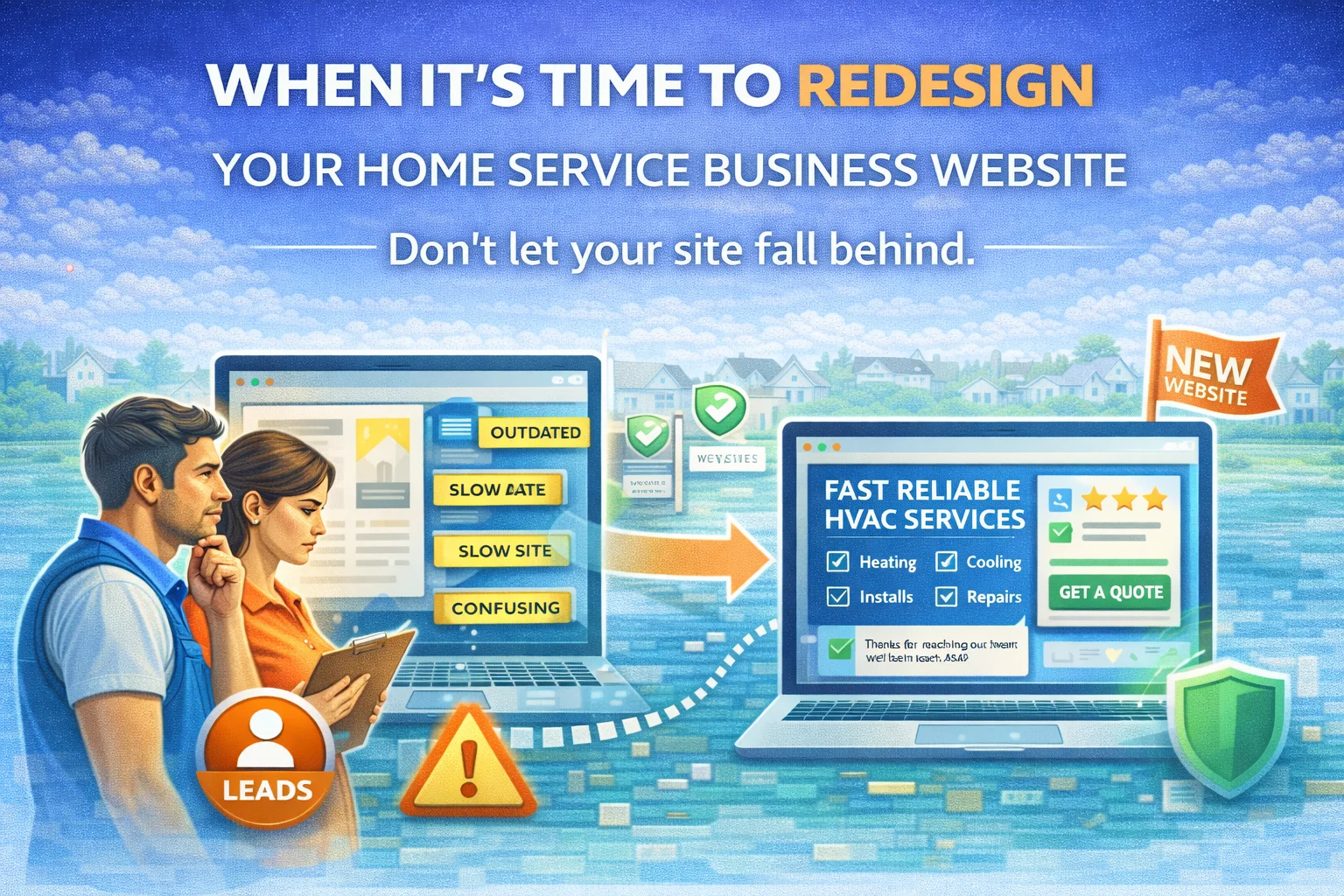
Most home service business websites do not fail overnight. Instead, they slowly fall behind. What once felt modern and effective becomes outdated, harder to manage, and less reliable at generating leads.
Many business owners sense this happening but hesitate to act. Redesigning a website feels disruptive, expensive, or unnecessary when the site still “works.”
The truth is that websites can quietly become growth bottlenecks. This article explains when it is time to redesign a home service business website and why waiting too long often costs more than acting early.
When Your Website No Longer Reflects Your Business
Businesses evolve. Services expand. Service areas grow. Teams get larger. However, many websites stay frozen in time.
When a website no longer reflects what the business actually does, confusion sets in. Customers may not see newer services, updated branding, or current messaging.
This disconnect reduces trust. A website should match the reality of the business today, not the version from years ago.
When Leads Slow Down Without a Clear Reason
A sudden drop in leads often has an obvious cause. A gradual decline is harder to notice.
If traffic remains steady but conversions fall, the website may be the issue. Slow load times, outdated layouts, or unclear calls to action quietly push visitors away.
When leads slow down without changes to marketing, the website deserves a closer look.
When the Website Is Difficult to Update
A website should be easy to maintain. When simple updates require outside help or technical workarounds, problems compound over time.
Outdated content lingers. Pages go untouched. Small issues turn into major obstacles.
If updating services, photos, or messaging feels frustrating or risky, the site is likely overdue for a redesign.
When Mobile Experience Feels Clunky or Broken
Mobile traffic dominates home service searches. If a website feels awkward on a phone, leads are lost daily.
Buttons may be hard to tap. Text may be difficult to read. Pages may load slowly or break entirely.
When mobile usability is poor, redesigning is no longer optional. It becomes a necessity for staying competitive.
When SEO Performance Plateaus or Declines
Search visibility depends heavily on website structure and performance. Older sites often struggle to adapt to modern SEO standards.
If rankings stagnate despite ongoing content or marketing efforts, the foundation may be holding everything back.
A redesign focused on SEO restores structure, improves speed, and creates a platform that can grow again.
When Automation and Systems No Longer Integrate Cleanly
Modern websites connect directly to CRMs, scheduling tools, forms, and automation workflows. Older sites often cannot support these systems without workarounds.
This creates manual effort, delays, and missed opportunities.
When a website cannot support automation cleanly, it limits efficiency across the entire business.
When Competitors’ Websites Feel More Trustworthy
Customers compare options quickly. If competitor websites feel faster, clearer, or more professional, perception shifts instantly.
Even strong service businesses lose opportunities when their websites feel outdated next to modern competitors.
A redesign levels the playing field and restores confidence.
Why Redesigning Is Often Less Risky Than Waiting
Many owners delay redesigns out of caution. However, outdated websites carry hidden risks.
They quietly lose leads. They weaken trust. They limit growth.
A strategic redesign improves performance without disrupting operations. When done correctly, it creates stability instead of chaos.
How a Redesign Supports Long-Term Growth
A redesigned website becomes easier to manage, faster to load, and clearer to navigate. It supports SEO, automation, and lead generation together.
Instead of patching problems, the business gains a platform built for the future.
For growing home service businesses, this foundation matters.
Final Thoughts
Websites do not expire on a set date. However, they do outgrow their usefulness.
When a site no longer reflects the business, supports growth, or meets customer expectations, redesigning becomes the smart move.
Recognizing the right time to redesign protects momentum and sets the stage for what comes next.