January 7, 2026
Why SEO Must Be Built Into Website Development From Day One
SEO should not be added after a website is built. This post explains why search optimization must be part of website development from day one and how it supports rankings, traffic, and long-term lead generation.
Written by Frankwin Hooglander
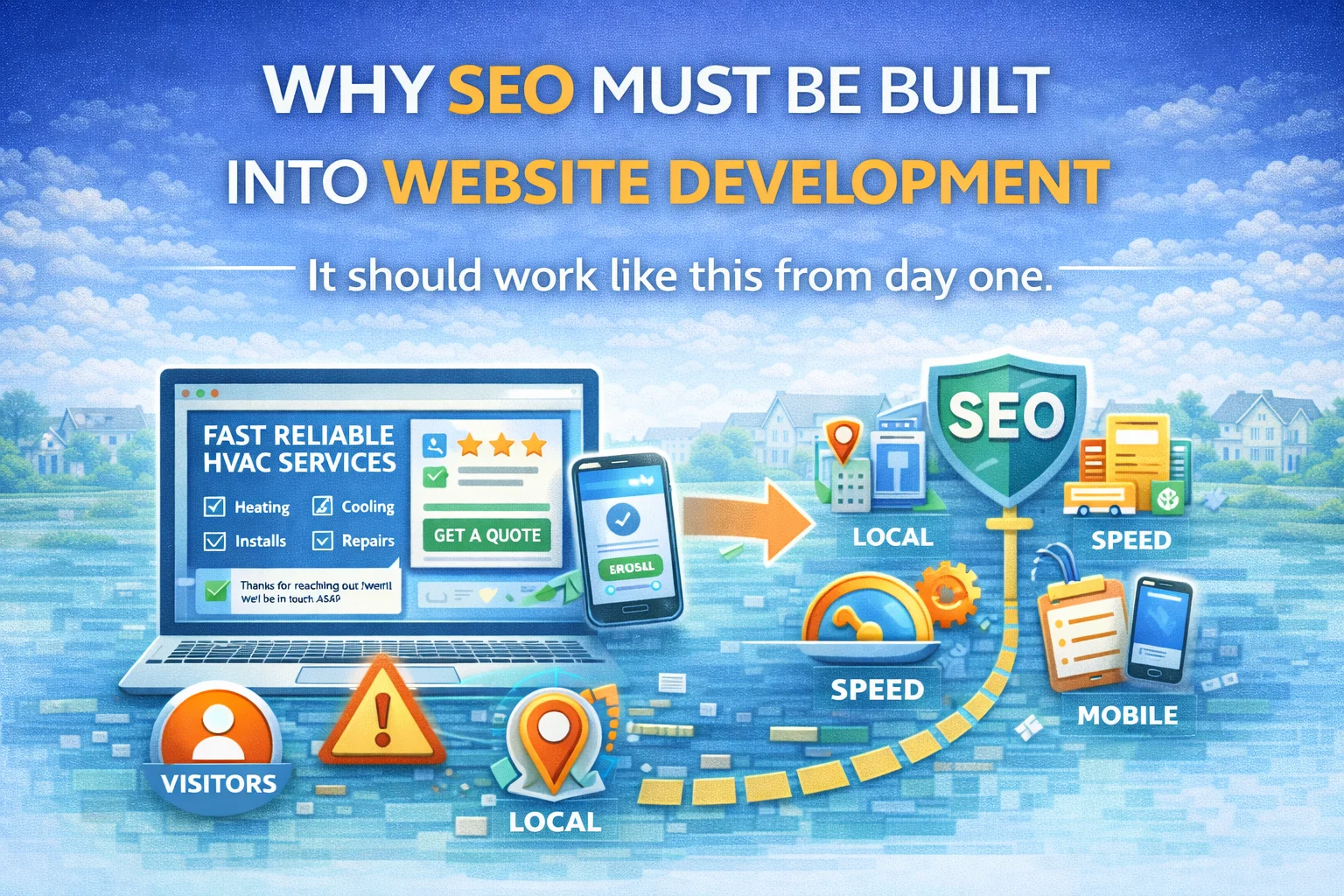
Many home service businesses treat SEO as something that happens after a website is built. The site goes live, and then SEO is added later as a separate project.
This approach almost always creates problems.
SEO is not an add-on. It is part of the foundation. When search optimization is not considered during website development, businesses end up rebuilding pages, restructuring content, and fixing technical issues that could have been avoided from the start.
This article explains why SEO must be built into website development from day one and how doing so supports long-term visibility and lead generation for home service businesses.
Website Structure Shapes Search Visibility
Search engines rely on structure to understand a website. Clear page hierarchy, logical navigation, and properly organized content all help Google understand what a business offers and where it operates.
When websites are built without SEO in mind, pages often compete with each other or fail to rank at all. Services may be buried under vague navigation. Locations may be unclear. Important pages may lack focus.
SEO-first website development ensures each service and location has a clear purpose. This clarity benefits both users and search engines.
Page Speed and Performance Are SEO Signals
Website performance is not just about user experience. It directly affects search rankings.
Slow load times increase bounce rates and signal poor quality to search engines. Mobile performance is especially important, as most home service searches happen on phones.
When performance is prioritized during development, the site starts strong. When performance is ignored, SEO efforts later become an uphill battle.
Building fast from the beginning is far easier than fixing speed issues later.
Content Layout Influences Rankings
SEO is not only about keywords. It is also about how content is presented.
Headings, spacing, internal links, and content flow help search engines interpret relevance. When content is poorly structured, even well-written pages struggle to rank.
SEO-driven website development ensures content is readable, scannable, and aligned with search intent. This improves both rankings and conversion rates.
Mobile Optimization Is an SEO Requirement
Google evaluates websites primarily based on mobile experience. If a site performs poorly on mobile devices, rankings suffer.
SEO-focused development prioritizes mobile usability from the start. Layouts adapt naturally. Buttons are easy to tap. Text remains readable without zooming.
For home service businesses, mobile SEO is not optional. It is foundational.
Local SEO Starts With Development
Home service businesses rely heavily on local search visibility. Location-based SEO depends on proper page structure, consistent business information, and clear service areas.
When SEO is built into development, location pages are structured correctly from the beginning. Service areas are clearly defined. Contact information remains consistent.
Fixing local SEO issues after launch is far more difficult than building it correctly upfront.
Internal Linking Supports Authority Growth
Internal links help search engines understand relationships between pages. They also guide visitors through the site naturally.
SEO-first development plans internal linking from the beginning. Service pages support each other. Blog posts reinforce core services. Authority flows where it matters most.
Without this planning, websites become fragmented and harder to rank.
Why Retroactive SEO Costs More
When SEO is added after development, businesses often pay twice. Pages must be rewritten. URLs may change. Structures need adjustment.
This creates downtime, ranking fluctuations, and additional expense.
Building SEO into website development avoids these issues. It creates a stable foundation that grows stronger over time.
How SEO-Driven Development Supports Long-Term Growth
Websites built with SEO in mind age well. As content is added, authority grows naturally. Rankings improve steadily instead of requiring constant fixes.
For home service businesses competing in local markets, this long-term stability is critical.
SEO-first development is not about shortcuts. It is about sustainability.
Final Thoughts
SEO should never be an afterthought. For home service businesses, it belongs at the core of website development.
When SEO is built in from day one, websites perform better, rank faster, and generate leads more consistently. The site becomes a growth asset instead of a recurring problem.
Strong SEO starts with strong foundations. Website development is where that foundation is built.